US Strategic Partnership Charters with Azerbaijan and Armenia: A Comparative Analysis
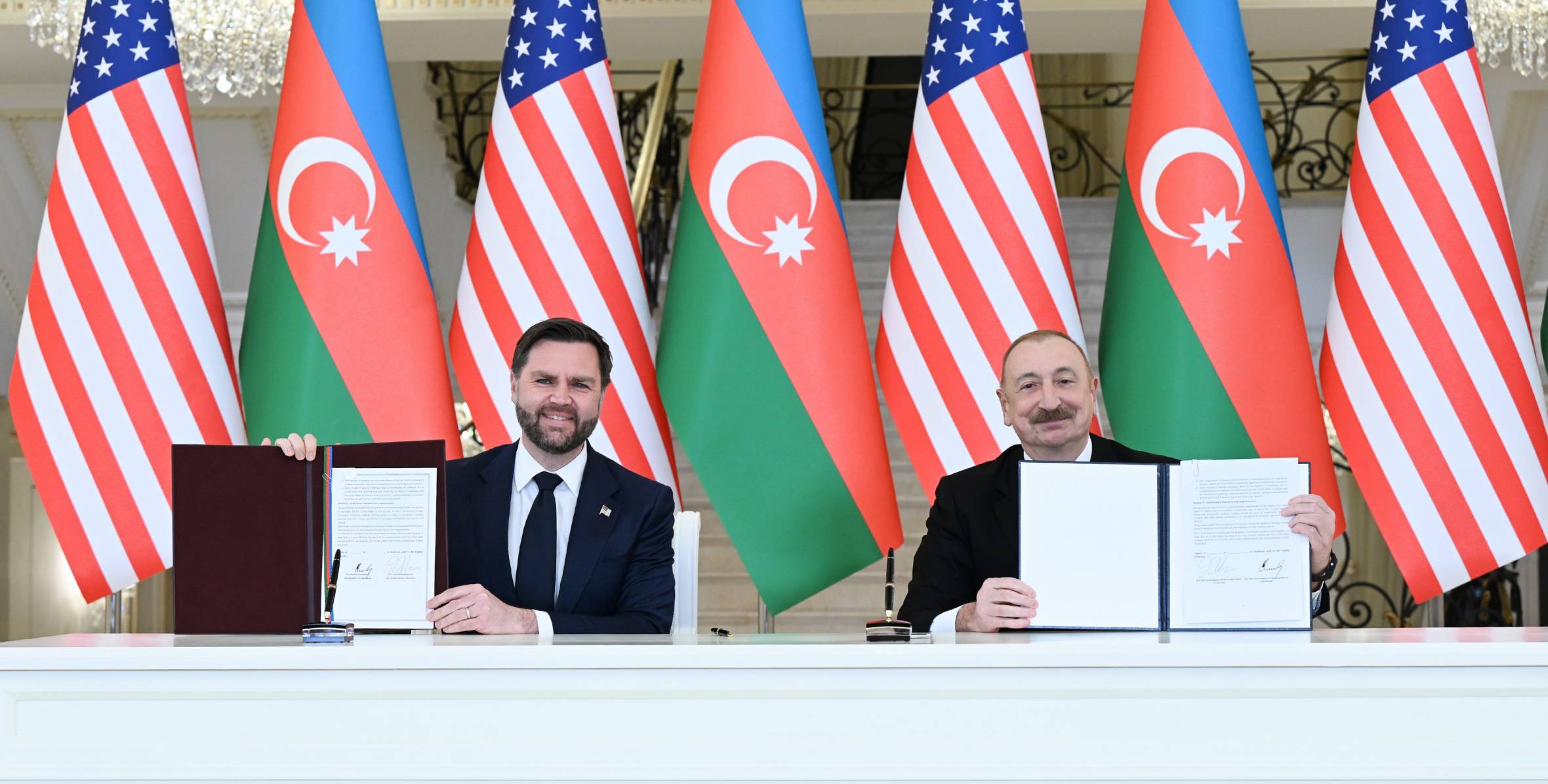
On February 10, 2026, President Ilham Aliyev and US Vice-President JD Vance signed the Charter on Strategic Partnership between the Government of the Republic of Azerbaijan and the Government of the United States of America. A similar document was signed between the US and Armenia on January 14, 2025, in Washington DC. Those documents are formally similar but substantively different. The divergence reflects distinct approaches by the two US administrations and two fundamentally different conceptions of partnership in the South Caucasus.
The Armenia charter, concluded in the final days of the Biden administration, is grounded in a normative and reform-driven worldview. It frames the relationship as a largely one-directional process aimed at shaping Armenia through the familiar democracy and human-rights discourse characteristic of Biden-era foreign policy. The document is aspirational and transformational in nature, treating Armenia less as a partner than as a state to be politically and institutionally molded.
The Azerbaijan charter, signed under the Trump administration, reflects a sharply different strategic philosophy. It is realist in both language and intent, prioritizing power, assets, and concrete interests. Azerbaijan is treated as a capable strategic actor whose existing strengths—energy resources, transit geography, security capacity, and technological ambitions—are to be utilized rather than reshaped. The emphasis on major infrastructure projects, energy corridors, digital connectivity, artificial intelligence, and defense cooperation signals a focus on tangible returns and rapid implementation.
Most importantly, the Azerbaijan charter treats Baku as an ally on near-equal footing with the United States rather than as a junior or reform-dependent partner. The language is symmetrical and transactional, stressing mutual benefit, joint initiatives, and shared strategic interests. Azerbaijan is presented as a reliable energy supplier and a key regional hub for transcontinental connectivity, not as a state requiring political guidance or institutional correction. Security cooperation is framed in practical terms—counterterrorism, cybersecurity, de-mining, and defense trade—reflecting a realist assessment that Azerbaijan already possesses leverage and strategic value.
The divergence between the two charters therefore reflects both differences between the two countries and differences in governing philosophies of the two US administrations. Armenia is approached as a long-term client state embedded in a reform and conditionality framework. Azerbaijan is approached as a strategic equal whose value lies in energy security, transit routes, technological platforms, and hard security cooperation. Where the Biden administration sought to anchor U.S. influence through patronizing normative engagement, the Trump administration seeks to maximize strategic benefit and balance-of-power advantage.
Thus, the signed Charter, as the result of President Ilham Aliyev’s purposeful, systematic, and principled policy, constitutes a historic achievement for Azerbaijan both in absolute and comparative terms.
The Daily Baku editorial team
© 2026 The Daily Baku. All rights reserved.