If it had been said about Germany instead of Azerbaijan... – Merz’s “Monkey Case”
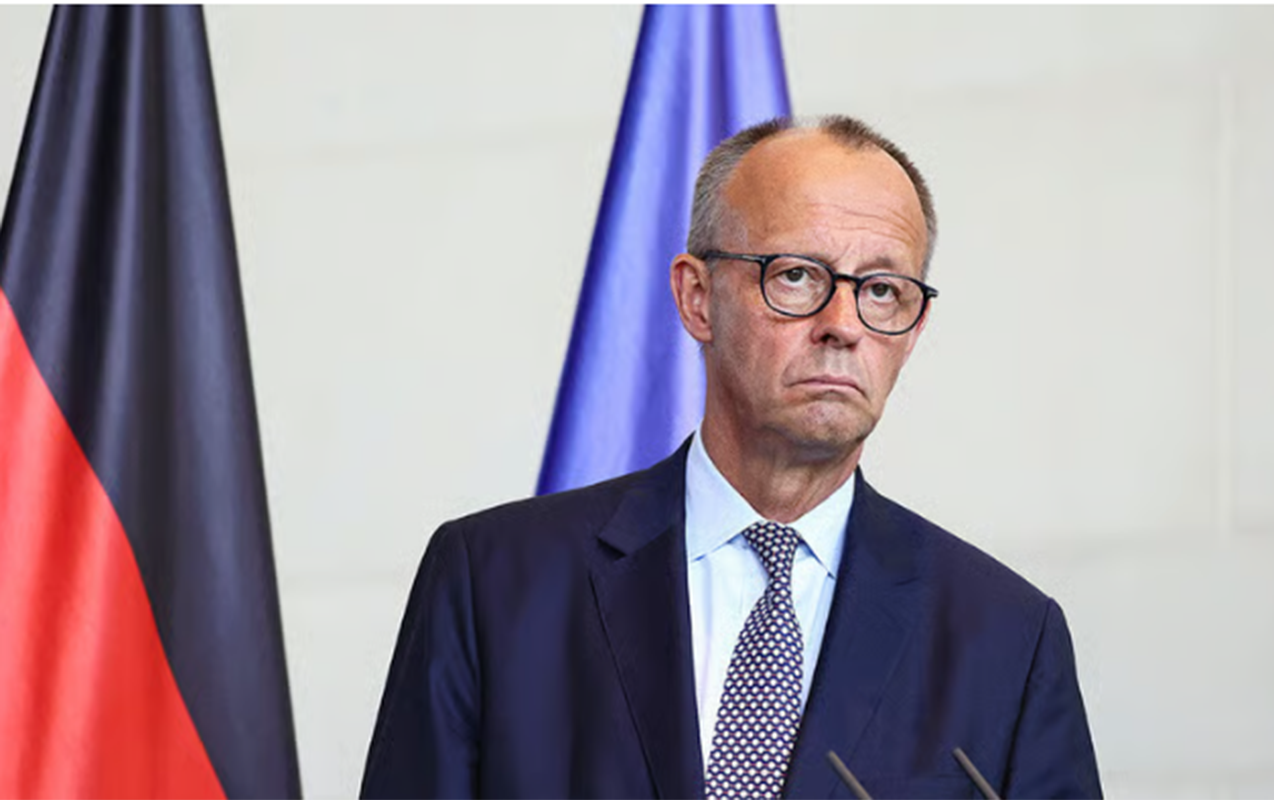
An official news report about German Chancellor Friedrich Merz’s visit to the city of Heilbronn has sparked an unusual reaction. Local police reviewed 400 comments posted on Facebook in response to the report. Of those comments, 38 were deemed suspicious and forwarded to prosecutors for legal assessment.
According to The Daily Baku, citing Qafqazinfo, one social media user referred to Merz as a “Lackaffe.” In German, the expression literally means “dressed-up monkey,” but it is also used to describe an “arrogant fool” or a “conceited person.” The Heilbronn Prosecutor’s Office classified the remark as an “insult against a political figure” and requested that the court impose a fine equivalent to 30 days of the author’s income. The court ultimately closed the case in exchange for a €100 payment.
However, the main reason this issue has entered the news agenda is not the €100 fine itself. The broader concern is that criticism of senior officials on social media in Germany can result in legal liability, and that the number of such court cases has increased in recent years. During Merz’s tenure, the systematic review of social media comments by prosecutors has generated significant debate and concern among German media outlets and human rights advocates.
German experts argue that the so-called “monkey case” (Lackaffe) reflects the actual state of freedom of expression in the country and reveals the true nature of the Friedrich Merz government’s approach to democratic values. They contend that while there are public calls for human rights and freedom of speech, the reality includes actions that contradict democratic principles.
According to this view, social media activists have highlighted the “monkey case” for two reasons. First, by promoting it under the official name of the court case, they seek to challenge the nature of the punishment. Second, they use the case to illustrate what they see as the character of Friedrich Merz’s political approach, comparing the Chancellor’s political course to a “monkey game.”
Monitoring organizations note that during Friedrich Merz’s time in office, hundreds of legal cases have reportedly been launched against individuals who criticized him or his team on social media. In some cases, searches were conducted at private residences and mobile phones were confiscated. The process has affected not only social media users but also professional journalists.
For example, in April 2025, Deutschland-Kurier editor-in-chief David Bendels received a seven-month suspended prison sentence on defamation charges after sharing a manipulated image of Federal Interior Minister Nancy Faeser on X. Another well-known case involved Der Spiegel editor Claas Relotius, who was dismissed from the publication in 2018 after it was revealed that he had fabricated facts and interviews. Awards and honors previously granted to him were subsequently withdrawn.
It is worth noting that Germany has strict legal provisions designed to protect the honor and dignity of politicians. Under Section 188 of the German Criminal Code (StGB), anyone who insults a politician in a manner capable of significantly hindering their public activities may face a prison sentence of up to three years or a fine.
A distinctive feature of German legislation is that it imposes responsibility not only on those who publish content deemed insulting or defamatory, but also on the platforms that host such content. Social media companies are required to remove illegal content, maintain complaint mechanisms, and publish transparency reports.
These obligations are regulated by the Netzwerkdurchsetzungsgesetz (NetzDG), often referred to as the “Facebook Act” or the “Network Enforcement Act,” which came into force in Germany in 2018. Under the law, social media platforms must promptly remove content that has been reported as illegal in Germany. Platform operators are also obliged to respond to requests from German law enforcement authorities. Companies that fail to comply with these requirements can face fines amounting to tens of millions of euros.
International organizations have noted that Friedrich Merz’s team makes extensive use of this legislation in efforts to limit criticism and insults directed against them.
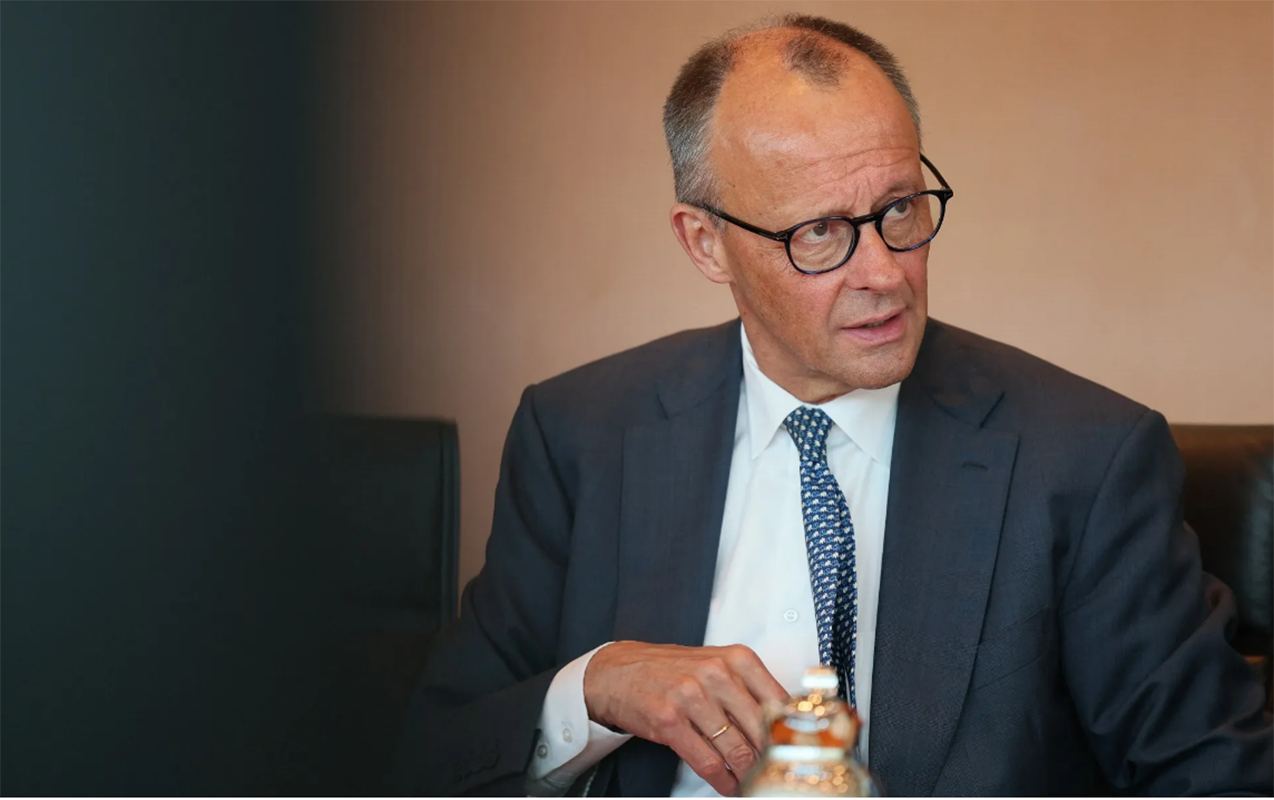
The controversy surrounding the “monkey case” is not only a concern for German human rights advocates, but has also become a subject of discussion on international platforms. In an article titled “Europe’s Free Speech Crisis,” The Washington Times wrote that “many European countries have laws imposing criminal liability for insulting a head of state... Germany has taken this practice to an extreme.” The author described this as a paradoxical situation.
Observers argue that the actions of Friedrich Merz’s team are indeed marked by a number of paradoxes. While the German government has adopted strict information laws under the banner of “setting standards for freedom of expression” and “drawing a distinction between criticism and insult,” critics contend that it ultimately violates the very principles it claims to uphold.
According to this view, Germany allows unrestricted activity by what Azerbaijani commentators describe as “insult-based opposition” and “insult media” groups operating from its territory and directing offensive rhetoric against the Azerbaijani state, its representatives, and the Azerbaijani people. Although these individuals are ethnically Azerbaijani, they are subject to the laws of the countries in which they reside and operate. In this case, they fall under German jurisdiction.
For example, the YouTube channel Azad Söz was established and operates in Germany under German law. In a previous article titled “Insult Media Under the Shadow of Strict Laws: Why Does Germany Turn a Blind Eye?”, we discussed the ways in which the channel allegedly violates both Germany’s information laws and the ethical codes governing journalistic activity.
Why, then, do the German authorities tolerate what critics describe as violations of the law on their own territory? Are these laws intended solely to protect Friedrich Merz personally, or are they meant to regulate media activity more broadly? What would have happened if Tural Sadigli had directed even ten percent of the criticism he levels against the Azerbaijani government toward Merz himself?
Such questions lead some observers to conclude that Friedrich Merz employs a “monkey game” strategy not only in domestic politics but also in foreign policy. According to this interpretation, Azerbaijan and the broader Turkic world are among the targets of this approach. Critics further argue that Germany, which they accuse of supporting, financing, and directing Kurdish separatist groups, is attempting to exert pressure on Azerbaijan through similar methods and by relying on figures such as Tural Sadigli to advance its political objectives.
Mushfig Alasgarli
Member of the Board of the Press Council

© 2026 The Daily Baku. All rights reserved.