Turkish political analyst: A U.S. attack on Iran could shake the global energy market within 24 hours
Rising tensions between the United States and Iran have already reached a peak, bringing new risk scenarios to the agenda in the region.
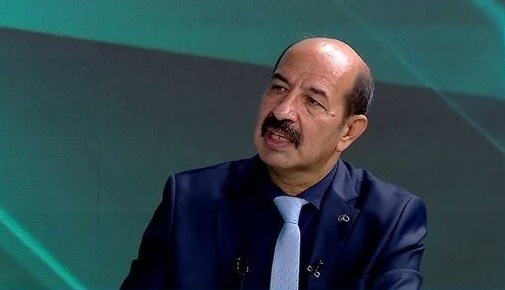
Turkish political analyst Ismail Cingöz stated this in comments to The Daily Baku.
According to him, the United States’ deployment of large-scale military forces toward the Gulf of Aden and the Arabian Sea, led by the aircraft carrier Abraham Lincoln, is further deepening the crisis: “These steps by the United States indicate not de-escalation, but rather that new military scenarios are being discussed. The Iranian side, in turn, has declared that it is ready for a possible attack and is openly demonstrating that it is on high alert.”
The analyst noted that a potential U.S. strike on Iran would effectively mean Israel’s involvement in the conflict as well: “Israel is the closest partner of the United States, and in such a scenario it is unrealistic to expect it to remain outside the process. At the same time, questions arise as to whether the U.S. will actually carry out a direct attack. Statements by several Gulf countries, led by Saudi Arabia, that they would not allow the use of their air bases and maritime areas came as an unexpected signal for Washington.”
Cingöz emphasized that despite many Middle Eastern countries being considered traditional allies, the lack of the same level of support this time could force the United States to act more cautiously. At the same time, the possibility of unpredictable decisions by U.S. President Donald Trump cannot be ruled out.
The analyst recalled that although Iran has suffered certain blows in recent months, it has filled some gaps with technical and military support from China, North Korea, and Russia: “There has been progress in the field of ballistic and cruise missile systems. The military exercises conducted should be seen as Tehran’s message that ‘we are ready and strong.’ Nevertheless, the likelihood of changing Iran’s leadership as a result of military intervention appears low.”
“Closing the strait would not only affect the United States, but could shake the global energy market. Such a step could push oil and gas prices to record levels within 24 hours.”
The analyst added that this scenario could also align to some extent with Russia’s interests, as rising energy prices would strengthen Russia’s economic position.
Touching on Türkiye’s possible mediating role, Cingöz said this is a realistic option: “Türkiye is both a NATO member and maintains open diplomatic channels with Iran. Despite disagreements with the United States, functional relations continue. Türkiye is one of the rare actors capable of combining hard power with diplomacy, which puts it in a favorable position for mediation.”
According to the expert, the United States may prefer a strategy of pressure rather than a direct military strike. Cingöz noted that the growing U.S. public debt and the financial burden of a potential war are also factors pushing Washington to think twice. Moreover, the reluctance of European countries to openly support such an attack could leave the United States partially isolated.
The analyst stated that a possible war would not only trigger a global energy crisis, but would also alter transport routes, energy supply chains, and foreign policy balances: “Such a crisis could negatively affect Türkiye, Azerbaijan, and other countries. At the same time, rising energy prices could create alternative revenue opportunities for some producer countries.”
In conclusion, the expert stressed that the United States may seek a path to compromise by increasing tensions in the region through a long-term crisis: “It appears that rather than a direct large-scale war, the United States is exploring ways to gain strategic advantage through a controlled crisis.”
© 2026 The Daily Baku. All rights reserved.