TRIPP and the Strategic Rewiring of Eurasian Connectivity
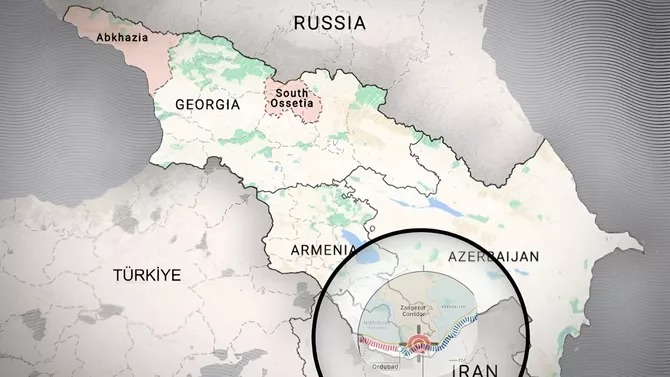
The South Caucasus is once again emerging as a focal point of strategic recalibration. Amid intensifying global competition over transport corridors and supply chain resilience, the Zangezur Corridor — increasingly referred to in policy discussions as TRIPP (Trump Route for International Peace and Prosperity) — is evolving beyond the framework of a regional infrastructure initiative. What is at stake is not merely connectivity between territories, but the redistribution of transit leverage, the redefinition of strategic alignments, and the consolidation of geopolitical agency in a critical Eurasian crossroads.
Azerbaijan’s experience over the past two decades demonstrates that major infrastructure initiatives launched from Baku have often grown into projects of global significance. The Southern Gas Corridor initially emerged as a diversification effort designed to deliver Caspian gas to European markets. Over time, however, it became a structural element of Europe’s energy security architecture, particularly as geopolitical volatility reshaped global energy flows. What began as a regional export strategy evolved into a cornerstone of continental resilience.
A similar trajectory can be observed in the case of the Zangezur Corridor. The concept of reopening regional communications was formally embedded in the trilateral statement of 9–10 November 2020, which ended the 44-day Second Karabakh war and restored Azerbaijan’s territorial integrity. The clause on unblocking economic and transport links was not incidental; it reflected Baku’s strategic vision of transforming a post-conflict landscape into a framework for long-term regional interdependence. President Ilham Aliyev has consistently argued that the corridor would generate economic dividends not only for Azerbaijan but for Armenia and the wider region, positioning connectivity as a stabilizing mechanism rather than a zero-sum instrument.
Today, the Zangezur Corridor is widely discussed as a vital branch of the Middle Corridor — the trans-Caspian route linking China and Central Asia with Europe via the South Caucasus and Türkiye. At this intersection, the interests of major global actors converge.
For China, the Middle Corridor aligns with the western vector of the Belt and Road Initiative. As geopolitical fragmentation complicates traditional northern routes, Beijing has strong incentives to diversify its overland access to European markets. The South Caucasus segment represents a critical alternative artery capable of enhancing flexibility and reducing systemic vulnerability in Eurasian trade flows. Stability along this corridor directly affects transit speed, insurance costs, and long-term investment calculations.
For the United States, the strategic logic is distinct yet equally consequential. Washington’s renewed engagement in the South Caucasus — underscored by high-level diplomatic visits, including that of the U.S. Vice President — signals recognition that the region forms part of an emerging transportation architecture connecting Central Asia to Europe. From an American perspective, diversified transit routes reduce the risks of overconcentration of logistical leverage in any single direction and strengthen partnerships with states capable of ensuring institutional reliability. The corridor is therefore viewed not solely through a commercial lens, but as a structural component of broader geopolitical balance.
Central Asian states see in the Middle Corridor an opportunity to expand export options and enhance strategic autonomy. Access through the Caspian and the South Caucasus provides them with a more direct link to Türkiye and European markets, reinforcing their negotiating positions within a shifting Eurasian landscape.
The European Union’s focus is resilience. As supply chains face geopolitical pressure, diversified transit routes through the South Caucasus have become strategically important. This was evident at the 62nd Munich Security Conference, where President Ilham Aliyev spoke at the panel “Open Corridors, Closed Borders: Connectivity and Fragmentation in Eurasia.” The Middle Corridor, including the Zangezur route, was discussed as a key link between Central Asia and Europe.
At the same time, the EU’s approach toward Azerbaijan is becoming more pragmatic. The emphasis is moving from conditional rhetoric to mutually beneficial cooperation, building on energy partnership and expanding into connectivity and infrastructure resilience — with Azerbaijan recognized as a key strategic actor in the region.
Within this evolving framework, Baku’s role has become more prominent. Policymakers and analysts in Washington and other capitals increasingly characterize Azerbaijan as a security guarantor for a strategically sensitive segment of global transport infrastructure. The South Caucasus is one of the most complex geopolitical junctions in Eurasia, where the interests of Russia, Türkiye, Iran, the European Union, the United States, and China intersect. In such an environment, predictability, territorial control, and institutional coherence are decisive assets.
Azerbaijan has positioned itself not merely as a transit state, but as a stabilizing actor capable of safeguarding infrastructure continuity in a geopolitically dense environment. For external stakeholders, the reliability of the route is often as important as its geographic efficiency. Long-term strategic planning, energy diplomacy experience, and demonstrated capacity to implement large-scale cross-border projects contribute to perceptions of Baku as a pivotal node in the emerging trans-Eurasian system.
The Zangezur Corridor should therefore be understood not as an isolated infrastructure project, but as part of a broader strategic continuum. Just as the Southern Gas Corridor became embedded in global energy security, the Zangezur route has the potential to anchor a new phase of Eurasian connectivity. Its ultimate impact will depend less on physical infrastructure and more on the durability of political agreements, institutional safeguards, and the ability of regional actors — particularly Azerbaijan — to translate geographic advantage into sustainable strategic influence.
.jpeg)
Anastasia Lavrina
Political analyst
© 2026 The Daily Baku. All rights reserved.