"The Turkic World is a Single Strategic Family" — Anastasiya Lavrina
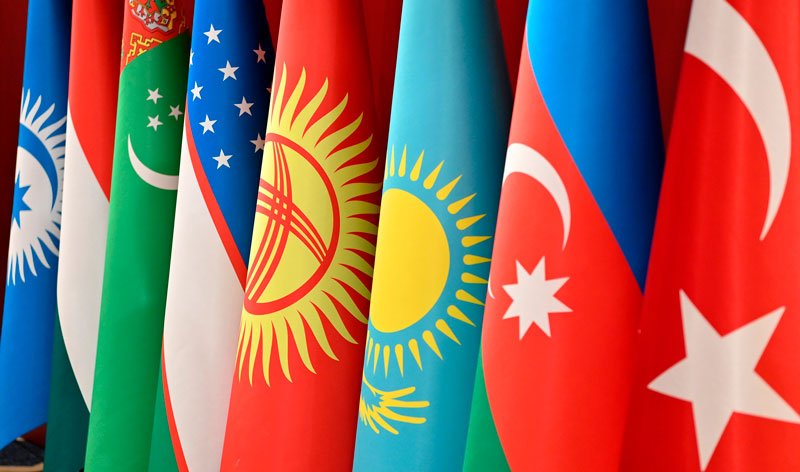
In an era of profound transformation in the global order, where traditional international security institutions demonstrate evident insolvency, the states of the Turkic world face a historic defining moment. The recent informal summit of the Organization of Turkic States (OTS) in Turkistan clearly established that the Turkic vector has transitioned from a platform for cultural exchange into one of the most promising, self-reliant, and powerful geopolitical centers of gravity in Eurasia. Azerbaijani President Ilham Aliyev consistently defines the Turkic world as a single strategic family. As conventional alliances fracture under global strain, this integration is anchored not in transient opportunism, but in an unshakeable foundation of shared history, sovereign equality, and geopolitical necessity, where solidarity serves as the primary guarantee of resilience.
The necessity for consolidation among Turkic states is dictated by pressing economic and logistical realities. Today, the combined GDP of OTS member states exceeds 1.5 trillion dollars, encompassing a population of over 170 million people. This represents a colossal market and a strategic foothold bridging East and West. Given the disruption of traditional northern transit routes, strengthening Turkic unity has emerged as a critical factor for the energy and transport security of the entire Eurasian landmass. The Middle Corridor (Trans-Caspian International Transport Route) serves as the primary artery of this integration. The data reflects a multi-fold increase in cargo traffic along this corridor, and the eventual full operationalization of the Zangezur Corridor / TRIPP is poised to conclusively seal the continuous logistical chain of the Turkic world. This economic sovereignty is further reinforced by a unified digital infrastructure, including the deployment of digital customs systems to streamline trade and the realization of the Digital Silk Road project, which establishes independent internet transit between Europe and Asia.
The most defining historical manifestation of genuine Turkic solidarity and its practical efficacy was the comprehensive restoration of Azerbaijan’s territorial integrity and sovereignty. The victory in the 44-day Patriotic War and subsequent measures to eliminate separatism demonstrated that the Turkic world possesses the capacity to effectively withstand external pressure, biased lobbying, and double standards from traditional external power centers. The fraternal political and moral support of Türkiye, alongside the diplomatic cohesion of other Turkic states, provided a robust shield against external interference in Azerbaijan's domestic affairs. Today, Garabagh has been transformed into a symbol of urban and national renaissance for the entire Turkic geography. OTS member states are making direct, tangible contributions to the large-scale reconstruction of the liberated territories—ranging from the construction of educational facilities to the implementation of "Smart City" and "Smart Village" concepts. This experience is pioneering, as Azerbaijan sets new global benchmarks for post-conflict regional regeneration based on ecological and digital architecture.
A crucial indicator of the maturity, agency, and principled stance of the Organization of Turkic States is its approach toward expanding institutional participation, most notably through the active engagement of the Turkish Republic of Northern Cyprus (TRNC). The inclusion of the TRNC in these collective processes serves as a benchmark for evaluating the independence of the Turkic alliance from external dictat. For an extended period, the unjust international isolation of TRNC was utilized by certain Western centers as an instrument of geopolitical containment. However, the systematic integration of the TRNC into the OTS structure proves that the Turkic world possesses the strategic will to chart its own domestic and foreign policy course independently. This represents an act of high solidarity and the restoration of historical equity, significantly strengthening the collective position of the alliance on the strategically vital Mediterranean frontier.
From a geopolitical analytical perspective, the strength of the Turkic bloc lies in its capacity to balance a global agenda with the rigid protection of national interests. Hosting major international forums in Baku, such as COP29 and the 13th World Urban Forum (WUF13), confirms Azerbaijan’s status as an authoritative multilateral moderator, yet the Turkic vector remains the nation's core civilizational and geopolitical anchor. The future of this integration depends on the readiness of its member states to translate political declarations into standardized defense, technological, financial, and investment frameworks. In a world that respects collective strength, a cohesive Turkic world stretching from the Mediterranean to the depths of Central Asia asserts itself not as a temporary coalition, but as an enduring alliance capable of shaping the Eurasian geopolitical landscape and guaranteeing the security of every member of its extended family.
© 2026 The Daily Baku. All rights reserved.