The Deepfake Era: Stay Away from Everything Fake!
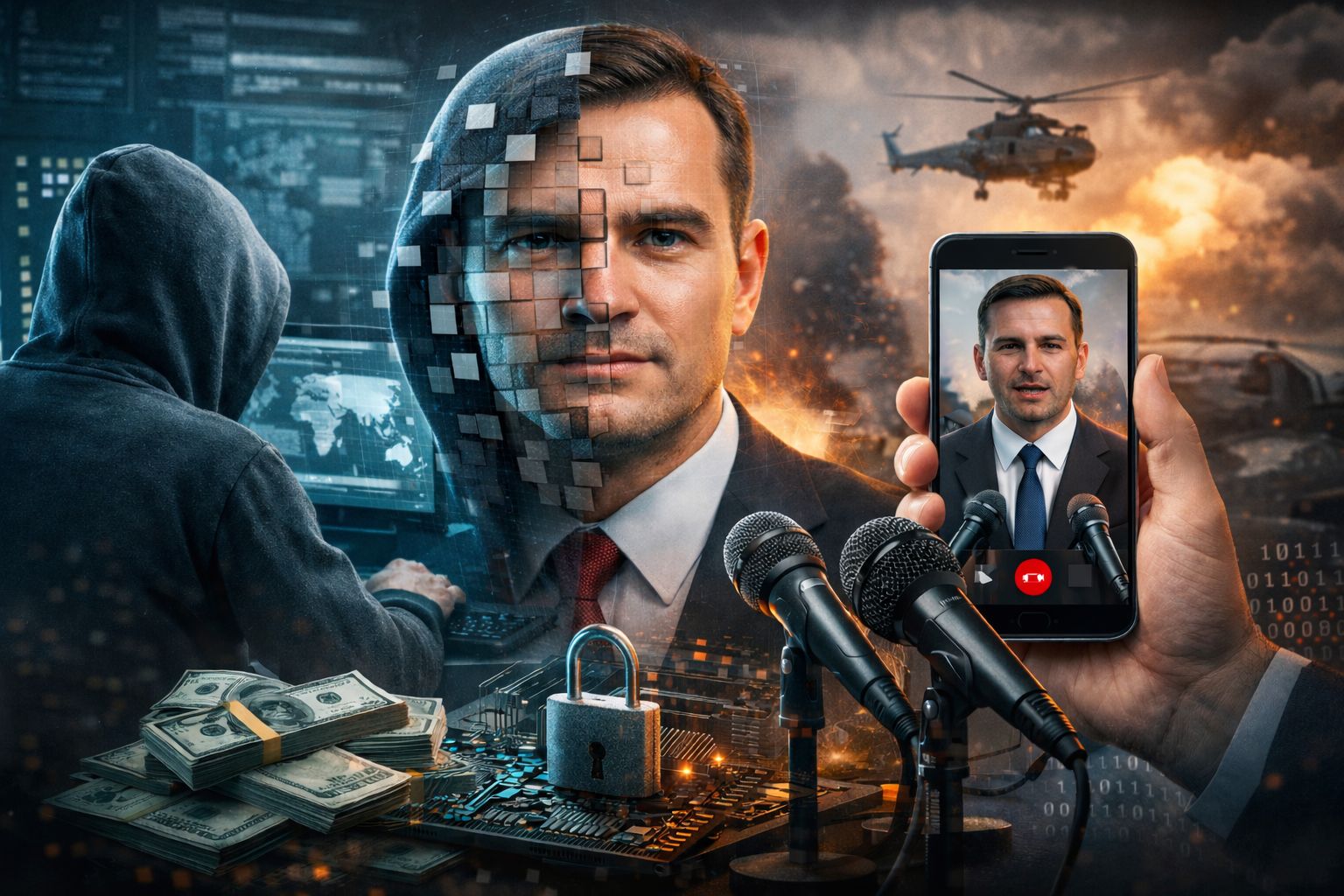
Deepfake technologies, as one of the fastest-spreading applications- and threats- of artificial intelligence, are targeting the very concept of trust in the information space. Through these tools, it is possible to target virtually any individual and falsify their voice or image. As a result, deepfake is no longer just a media issue; it is designed to create risks for social stability, personal integrity, and even state governance.
What is Deepfake?
The concept of deepfake has spread rapidly on the internet since 2017 and was initially recognized mainly through face-swap techniques. However, its technological roots trace back to earlier studies on real-time facial expression transfer. For example, Face2Face-type approaches demonstrated how facial expressions could be altered in a target video. Today, deepfake is no longer limited to video alone: voice cloning, lip-sync technology, fully synthetic content, and even abusive materials produced from a single photograph have become widespread.
The most serious danger of deepfake materials lies in their ability to be used across multiple dimensions.
First, financial fraud- deepfake has taken “classic phishing” to a new level. A case in
Second, risks to reputation and personal integrity. This type of content targets an individual’s life, reputation, and career, aiming to cause moral or financial harm and often functioning as a tool of blackmail.
Third, the risk of political manipulation, which is more strategic in nature. Deepfake technology can mobilize mass emotions and alter the agenda of electoral and public processes through short-term credibility. Analyses by the European Parliament on information manipulation also assess deepfakes as a factor that erodes trust, indicating that this risk is being recognized at a serious level.
Media literacy is now a matter of national security
In the deepfake era, information security is no longer only about fighting “fake news” - it is about proving reality itself. At present, the most effective defense mechanisms are verification and media literacy. Classical methods of resistance remain relevant: cross-checking information through multiple sources, informing the public, issuing rebuttals, and similar measures. In the online space, AI-generated content is increasingly being labeled as such. More effective countermeasures may emerge in the future, but this does not eliminate the need for media literacy and awareness.Modern individuals are now faced with the necessity of adapting to their time by learning how to distinguish such fake content.
The Daily
© 2026 The Daily Baku. All rights reserved.