The Daily Baku
International
Saudi–Emirati tensions over Yemen’s future reach critical levels
December 31, 2025
13:52
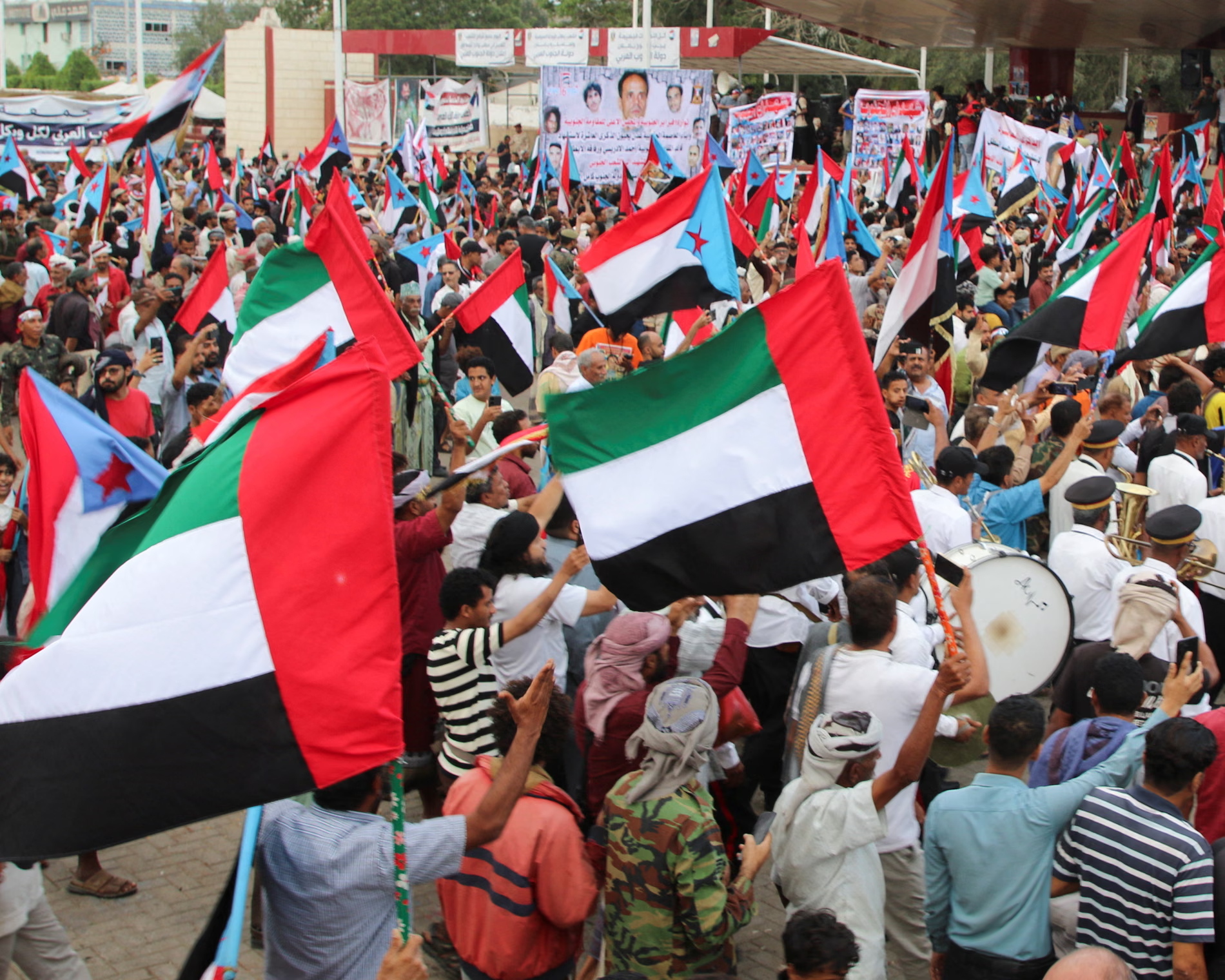
Relations between Saudi Arabia and the United Arab Emirates over Yemen’s political future have escalated sharply, with the prospect of a breakaway southern state pushing the two Gulf powers to a dangerous standoff. Riyadh has effectively accused Abu Dhabi of endangering Saudi national security, marking a serious deterioration in ties, The Daily Baku reports.
The dispute risks igniting a new civil conflict in southern Yemen and could extend into other regional flashpoints, including Sudan and the Horn of Africa, where Saudi Arabia and the UAE frequently support opposing factions. Yemen may become just one arena in a broader struggle between the two wealthy states for regional influence, maritime routes, and commercial leverage.
The UAE has been deeply involved in Yemen for years through its backing of the separatist Southern Transitional Council (STC). Many diplomats and analysts, including officials in Riyadh, long believed Abu Dhabi would eventually restrain the STC, encouraging it to postpone or abandon independence ambitions in favour of negotiations for expanded autonomy or greater representation within Yemen’s Presidential Leadership Council (PLC).
Saudi Arabia, however, has traditionally regarded Yemen as falling within its sphere of influence. It initially sought to defeat the Iran-backed Houthi movement through a controversial air campaign launched in 2015, before later shifting toward diplomacy under international pressure in an effort to reconcile the Houthis with the UN-recognised government based in Aden.
Over the past month, those assumptions have been upended. The UAE-backed STC crossed several previously unspoken red lines, prompting Saudi airstrikes on vehicles unloading at the port of Mukalla. Riyadh stated that the equipment had originated from an Emirati port and was intended for STC forces.
Saudi officials warned that any action threatening the kingdom’s security would be met decisively, underscoring that such threats constitute a non-negotiable red line.
Behind the scenes, the UAE has long viewed Yemen as a source of economic opportunity. By tapping into widespread southern resentment over the loss of independence following unification with the north in 1990, Abu Dhabi positioned the STC as its preferred partner—a calculation that ultimately paid off. In 2019, the STC gained formal recognition as a political actor when it was awarded seats on the PLC.
After years of marginalisation in UN-led peace efforts, STC leader Aidarous al-Zubaidi gradually gained acceptance in Western capitals and was permitted to attend high-level international forums, including the UN General Assembly. Still, the group remained dissatisfied, rejecting federal solutions and feeling sidelined within Yemen’s power-sharing framework.
This month, the STC seized the initiative by deploying forces into Hadramaut, Yemen’s largest southern governorate. The swift eastward advance brought nearly all territory of the former South Yemen under STC control, including key oil-producing regions. From there, the takeover of al-Mahra, the country’s easternmost governorate, followed with little resistance.
The developments stunned Saudi Arabia, which has since intensified diplomatic pressure on the UAE, demanding the STC withdraw. Riyadh has sought to isolate both Abu Dhabi and the separatists, warning that even if the STC maintains its gains, an independent southern Yemen would remain an unrecognised and economically fragile microstate.
So far, the UAE has shown no sign of retreat. The announced withdrawal of a small number of Emirati counterterrorism forces from Yemen is widely seen as symbolic, as political and logistical support for the STC continues.
Emirati commentators have framed the issue as a test of national resolve. Political scientist Abdulkhaleq Abdulla described the UAE’s stance as evidence of unwavering loyalty to its allies, portraying Abu Dhabi as a state that neither abandons partners nor avoids confrontation.
Similar nationalist rhetoric has emerged in Saudi Arabia. Farea al-Muslimi, a Yemen and Gulf analyst at Chatham House, warned that the stakes are exceptionally high. He noted that after years of indirect rivalry through local proxies, the dispute now appears to be shifting toward open confrontation, with Saudi Arabia publicly accusing the UAE of actions that threaten its southern border.
According to al-Muslimi, the crisis reflects deep disagreements over Yemen’s future political structure and the balance of power within it. He added that the UAE, despite its geographic distance, has pursued a more assertive and experimental strategy on the ground. The situation, he warned, resembles the early stages of the 2017 Gulf crisis involving Qatar, which triggered years of regional instability.
Al-Muslimi also suggested the Houthis stand to benefit from the growing rift, as former coalition partners—who once fought together unsuccessfully against them—now turn on each other.
Western governments, particularly the United States, have shown reluctance to openly criticise the UAE, as seen in Sudan. In Yemen, however, their sympathies are expected to align more closely with Saudi Arabia and the preservation of a unified Yemeni state.
© 2026 The Daily Baku. All rights reserved.
https://dailybaku.az/en/article/saudiemirati-tensions-over-yemens-future-reach-critical-levels