Israeli political analyst: Azerbaijan builds stability in the South Caucasus through economic interests
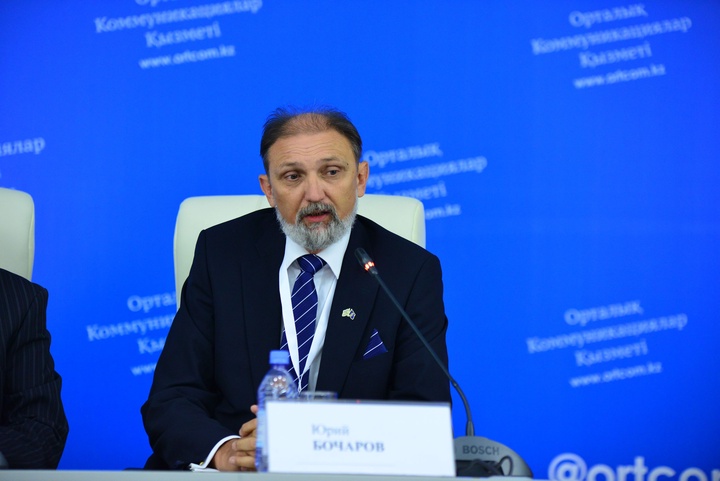
Azerbaijan’s simultaneous deepening of partnerships with the United States and Israel clearly strengthens the country’s regional positions, and this is a completely natural process in the context of current international realities.
These views were shared by Israeli political analyst Yuri Bocharov in a statement to The Daily Baku.
According to him, the key advantage of Azerbaijan’s multi vector policy lies in the fact that it aims not to turn the region into a zone of confrontation, but to shape it as a platform for real economic and technological cooperation.
“Strategic ties built in parallel with the United States and Israel further strengthen Baku’s balancing and unifying role in the South Caucasus. The U.S.–Azerbaijan Strategic Partnership Charter is not merely a political document, but also a mechanism that places cooperation in technology, the economy, security, and artificial intelligence into a long term and institutional framework. This approach removes relations from the current political agenda and transfers them into the sphere of strategic development,” he said.
The political analyst notes that cooperation between Azerbaijan and Israel in the field of artificial intelligence and high technologies is based precisely on this logic. “This is not only about individual projects, but about the development of digital infrastructure, specialist training, applied technological solutions, and the formation of an innovation ecosystem. This cooperation generates real economic results and deepens mutual interests. Such systematic technological and economic cooperation creates conditions for new jobs, increased investment, and expanded transit opportunities. As a result, the number of actors interested in maintaining stability in the region increases, and peace becomes not only a political appeal, but an economic necessity.”
Yuri Bocharov believes that as the South Caucasus becomes part of a broader transit and technological architecture, the value of stability in the region increases. This is because the issue is no longer limited to political positions, but involves long term investments, technologies, and economic interests. This, in turn, is an important factor serving the region’s sustainable development.
According to the analyst, the rise of Azerbaijan’s regional status naturally attracts greater attention. However, the key point is that Azerbaijan does not turn this process into an instrument against anyone. On the contrary, it builds it within the framework of its national interests and long term development strategy. This approach is precisely what makes Azerbaijan’s policy more resilient.
In conclusion, Yuri Bocharov emphasized that the course pursued by President Ilham Aliyev is a policy based on national interests and focused on a long term perspective. Various reactions coming from abroad, whether supportive or concerned, are secondary in this context. As the analyst put it, “if a project is backed by real benefits, institutional mechanisms, and political will, it continues on its path.”
© 2026 The Daily Baku. All rights reserved.