Iran’s attack on Azerbaijan: Context and consequences
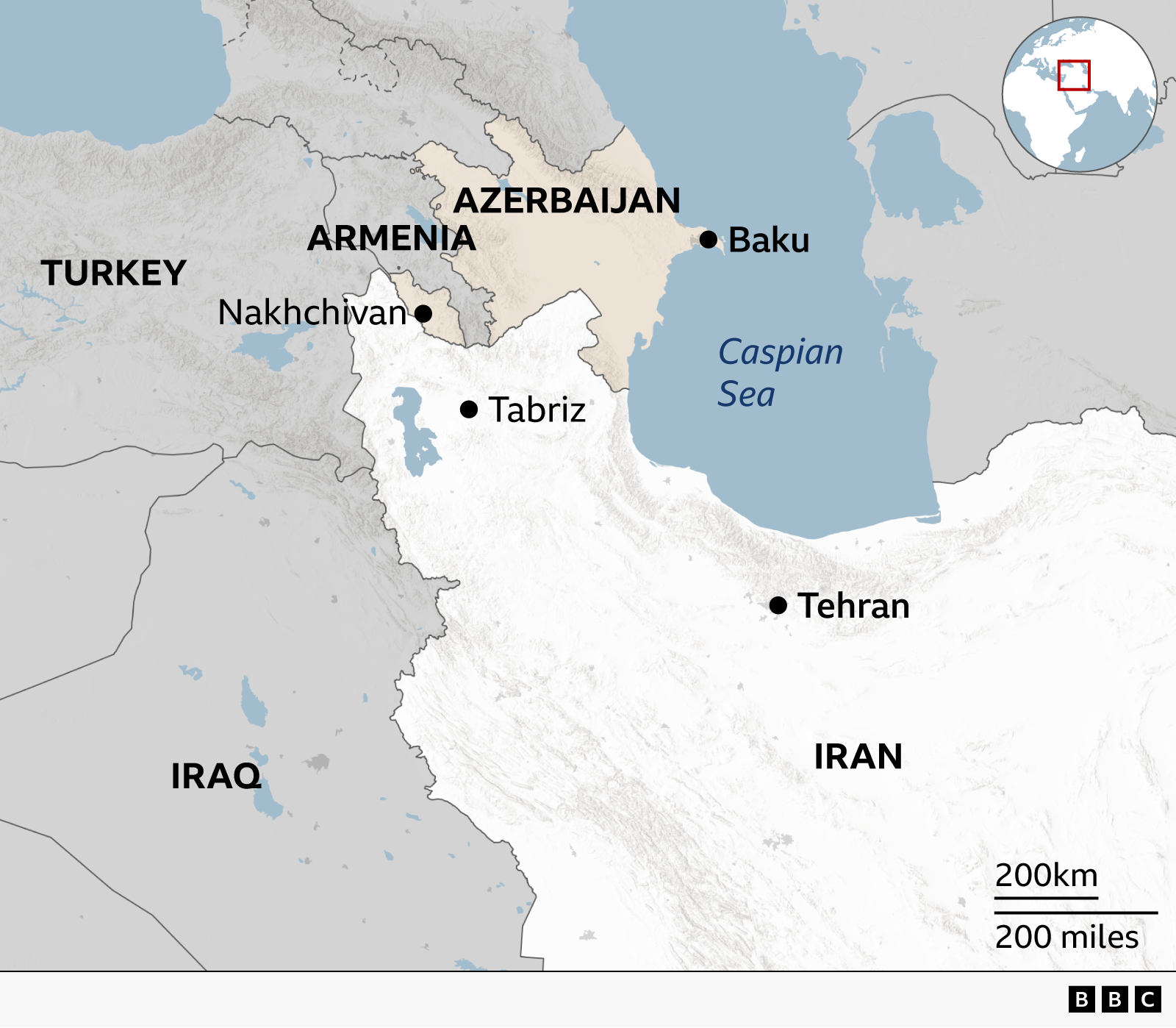
On 5 March 2026, Iran carried out an armed attack on Azerbaijan’s Nakhchivan airport and a nearby school, as a result of which four civilians were wounded. The Government of Azerbaijan issued sharply worded statements demanding an apology and indicating the possibility of retaliation. To understand these attacks, we need to look at the broader context.
Iran has historically been unfriendly toward the Republic of Azerbaijan. The main reason lies in the Azerbaijanis of Iran, who constitute between 25 and 40 percent of the population. The national question was not an issue under the Qajar dynasty, itself of Azerbaijani origin. The issue of ethnic and language policy became prominent in 1925 when an illiterate military officer named Reza overthrew the Qajars (certainly with foreign assistance). Reza adopted the lavish name “Pahlavi” for his “dynasty” to hide his humble origins and began to build a national state based on Persian nationalism, choosing the path of Persianisation of other nations.
Weird “scientific” hypotheses were devised to “prove” that Azerbaijanis were actually Persians only a few thousand years ago who had miraculously become Turkified in the wake of the Seljuk and Mongol invasions. Such open Persian nationalism, which had some elements resembling fascism, under Reza and his son Mohammad led to massive discontent among Azerbaijanis.
The overthrow of the Shah in 1979 by a cleric named Khomeini with rather weak scholarly credentials in Islamic jurisprudence, who had resided in France, and the establishment of a so-called religious state based on Khomeini’s concept of vilayat-e-faqih - an idea previously unseen in Shia Islam and rejected by many prominent Iranian religious scholars - served to recalibrate this Persianisation policy. Under the newly established regime, everyone was declared “equal” as Muslims. Somehow, however, Persians and the Persian language were considered more equal than others. The core concept of the Shah’s Persianisation policy continued under the regime established by Khomeini, this time adding religious ideology as a glue to hold together various ethnic groups. In the regime’s eyes, the best Azerbaijani is one who denies his Turkic origin and becomes fully Persianised.
The Khomeini regime also carried out harsh repression against Azerbaijanis who opposed its assimilation policies, including against the Azerbaijani marja-e-taqlid Ayatollah Shariatmadari, one of Iran’s highest-ranking religious authorities who had been considered untouchable even under the Shah.
The Iran-Iraq war of 1980–1988 greatly consolidated Khomeini’s regime and somewhat pushed ethnic discontent among Azerbaijanis into the background. However, only three years after the end of the war a development emerged that posed a challenge to Iran’s Persianisation policy: in 1991 the Republic of Azerbaijan restored its independence. Iran’s leadership regarded this as a completely unwelcome development and an obstacle to its large-scale assimilation policy toward Azerbaijanis. Iran’s chauvinist Persian political elite considers a strong and independent Azerbaijani state, with Azerbaijani as its state language, to be both a threat and a source of inspiration for South Azerbaijanis, at least in terms of demanding language rights.
The Persian-dominated regime in Iran employed two main tools to neutralize what it regarded as a threat to its assimilation policy.
First, it sought to keep Azerbaijan weak by supporting Armenia’s military occupation. A weak Azerbaijan would appear a less attractive alternative in the eyes of South Azerbaijanis. “Azerbaijan’s inability to cope with a smaller Armenia” constituted the core of the regime’s propaganda directed at South Azerbaijanis and was presented as key proof that they supposedly cannot live without the protection and patronage of Persians.
Second, Iran attempted to subvert Azerbaijan through Shia propaganda in order to radicalize Azerbaijan’s population, exert pressure on the government, and ultimately achieve the creation of a religious state in Azerbaijan under Iran’s control.
Azerbaijan’s brilliant victory over Armenia, which demonstrated considerable military skill, and its swift actions against Iran’s subversion attempts largely neutralized Iran’s toolkit. Moreover, Iran’s strategic blunders - wasting huge resources on its nuclear program and on armed groups in the Middle East, entering into confrontation with Israel, and maintaining hostile relations with the United States and the Gulf Arab states - have contributed to its growing isolation and weakening.
Now Iran is facing the consequences.
At this stage, the position of Iranian Azerbaijanis is key. The attack on Azerbaijan is a desperate and risky move intended to consolidate Azerbaijanis around the regime by portraying Azerbaijan and its possible countermeasures as part of a conspiracy with the “enemies of Iran.”
Azerbaijan’s swift and determined response shows that the country will not hold back in defending its national security. The Iranian regime is gravely mistaken in believing that a potential clash with Azerbaijan will consolidate the loyalty of South Azerbaijanis to the regime. There are already signals from within Iran that many South Azerbaijanis are unhappy with the government’s course following Iran’s latest attack against Azerbaijan.
Therefore, the best course for Iran is to use the door that Azerbaijan has left open - to apologize and take measures against those who organized the attacks on Nakhchivan on 5 March 2026.
The Daily Baku editorial team
© 2026 The Daily Baku. All rights reserved.