AIR Center Chairman spoke at the online forum of Gulf–Central Asia think tanks
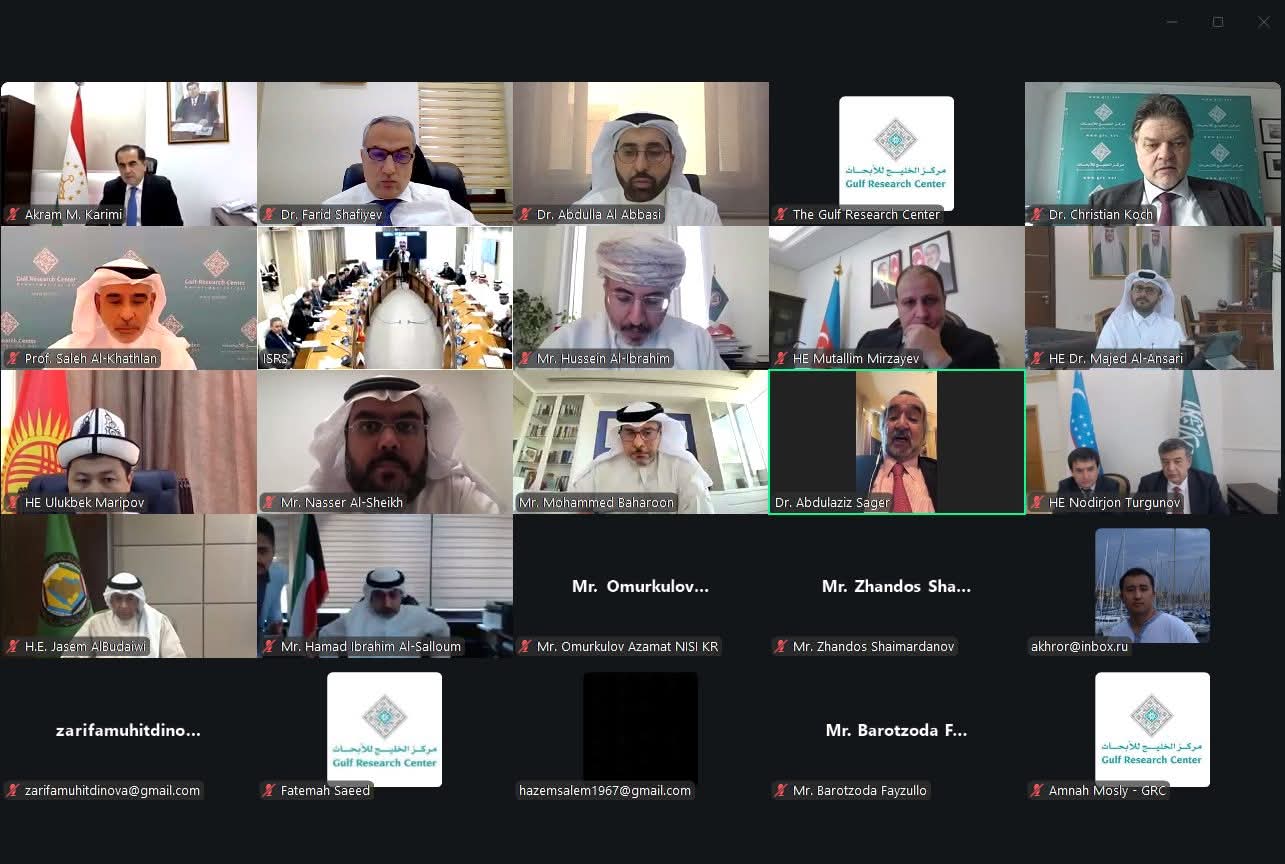
The Chairman of the Board of the Center of Analysis of International Relations (AIR Center), Farid Shafiyev, has addressed the Gulf–Central Asia Think Tanks Online Forum.
The forum was held in partnership between the Gulf Research Center and the Institute for Strategic and Regional Studies under the President of the Republic of Uzbekistan (ISRS).
Dedicated to the theme “Strengthening Gulf–Central Asia Cooperation in the Context of a Changing Regional Order,” the forum featured opening remarks by Abdulaziz Sager, founder and chairman of the Gulf Research Center, and Eldor Aripov, Director of ISRS.
During the panel discussions, Shafiyev highlighted Azerbaijan’s key role in linking Central Asia with Europe and other global markets. He also emphasized the growing demand for land transport corridors amid instability in the Middle East and the situation surrounding the Strait of Hormuz, noting the important role of the C6 countries in this process.
The AIR Center chairman noted that Azerbaijan’s inclusion in the Consultative Meeting of the Heads of State of Central Asia has significantly strengthened the country’s growing role in the regional architecture and created new opportunities for structured cooperation.
Shafiyev added that initiatives such as the “Trump Route for International Peace and Prosperity” (TRIPP), also known as the Zangezur Corridor, could further enhance the resilience and diversification of East–West connectivity.
“Connectivity remains one of the core pillars of the C6 agenda. This includes infrastructure development, digitalization, and the removal of existing barriers. As President Ilham Aliyev noted, Central Asia and Azerbaijan already constitute a ‘single geopolitical and geo-economic region.’ This idea reflects not only a political vision but also an emerging logistical and economic reality. Central Asian countries and Azerbaijan are increasingly acting as ‘Middle Powers’.”
It should be noted that during the first panel, dedicated to regional security dynamics, participants discussed the changing security environment in the Gulf and Central Asia amid increasing geopolitical competition and regional conflicts. Shared risks such as conflict spillover, non-state actors, and transnational threats were analyzed.
The second panel, titled “Trade, Energy and Transport Corridors,” focused on how Gulf and Central Asian countries can deepen economic interdependence by leveraging their strategic geographic positions.
© 2026 The Daily Baku. All rights reserved.