“‘Abusive media’ in the shadow of strict laws – why does Germany turn a blind eye?”
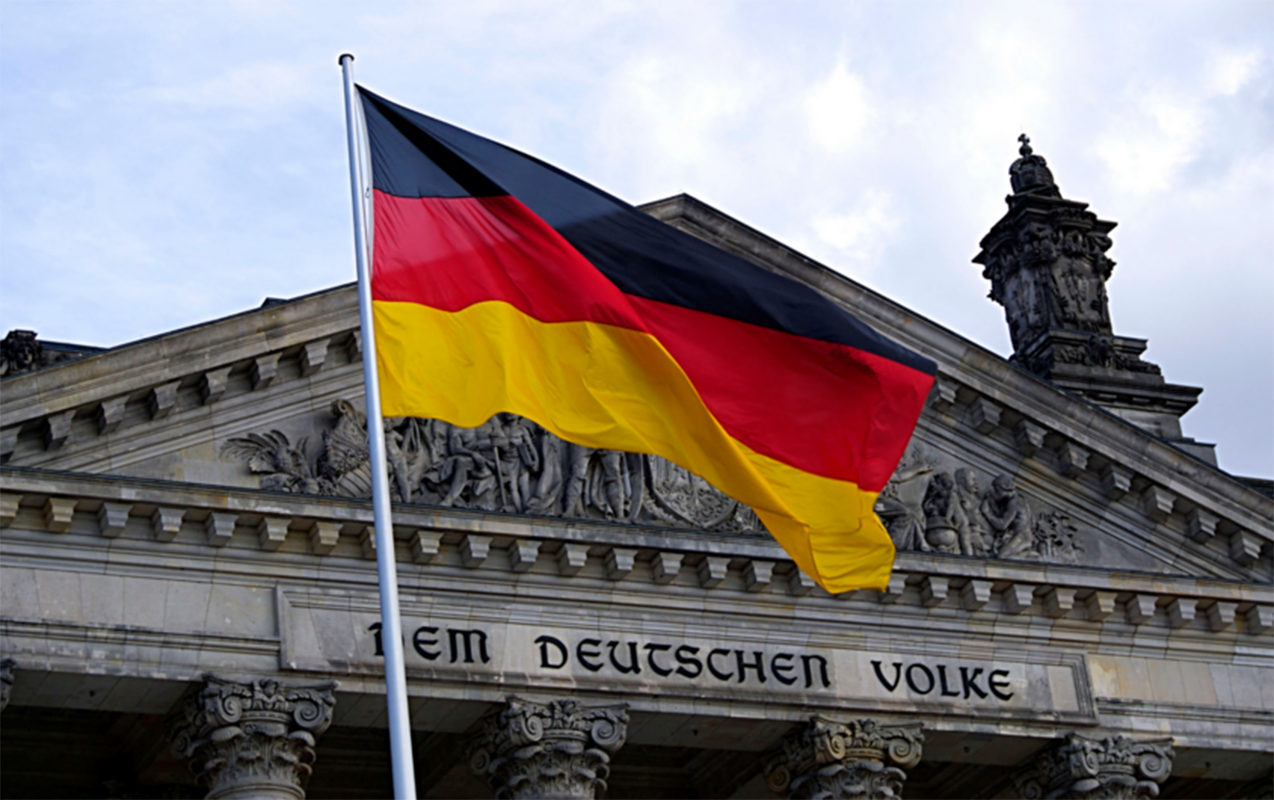
Recent legislative developments in the Federal Republic of Germany over the past decade have brought the level of responsibility borne by traditional media closer to that of social networks, The Daily Baku reports, citing QafqazInfo.
Errors in informational content – including defamation, insult, hate speech, false information and similar violations – give rise to legal liability regardless of whether such content is disseminated through a media outlet or a social network platform.
A distinctive feature of German legislation is that it establishes liability not only for those who create and share unlawful content, but also for the platforms that host such content. Social network platforms are obliged to remove illegal material, optimize complaint mechanisms, and provide transparency reports.
Taking into account current challenges, Germany exercises oversight over the social media segment and regulates it through legislation. The law commonly referred to as the “Facebook Act” or the “Network Enforcement Act” – Netzwerkdurchsetzungsgesetz (NetzDG) – entered into force in 2018.
The NetzDG law was adopted to monitor and address key issues such as reducing the spread of fake news, preventing disinformation, combating hate speech, restricting insults and defamation, and prohibiting the disclosure of personal data. It defines the responsibility not only of social media users but also of platform administrators. Platforms with more than two million users are required to establish offices in Germany and must promptly remove reported illegal content, even when its status is disputed.
Under the law, social network operators are required to respond to requests from German law enforcement authorities. Content that is clearly illegal must be removed within 24 hours, while disputed content must be blocked within seven days. Platform administrators face substantial financial penalties for violations, with fines reaching tens of millions of euros for non-compliance.
Following the implementation of NetzDG, the situation within Germany’s social media space has changed significantly. According to reports from Facebook, YouTube, and Twitter, millions of complaints have been reviewed. In the first six months of 2018 alone, Facebook reviewed 264,818 cases, YouTube 214,827, and Twitter 886, blocking content deemed problematic. In the following year, YouTube removed 285,000 videos in Germany under NetzDG requirements. Most platforms reported that a large portion of removed content involved hate speech, political extremism, and terrorist propaganda.
In addition to NetzDG, several other regulatory acts influence the operation of social networks in Germany. The General Data Protection Regulation, DSGVO, is the primary legal framework governing the protection of personal data in online information resources. Furthermore, the “Medienstaatsvertrag Act,” originally adopted for professional media platforms, was updated in 2020 to bring online platforms under the same regulatory framework as traditional media.
Thus, in Germany, the dissemination of information is regulated not only across traditional media outlets but also on social network platforms. Strict penalties are imposed both on those who share prohibited information and on platforms that facilitate its distribution. It should be noted that the adoption of laws such as NetzDG and BDSG has also sparked debates regarding freedom of expression in Germany. One of the most frequently criticized issues is the excessive removal of content. To avoid heavy fines, platforms sometimes remove content that may not necessarily be illegal but is considered controversial.
The Council of Europe has stated that this law may conflict with Article 10 of the European Convention on Human Rights. The organization Reporters Without Borders has emphasized that courts, not platforms, should determine whether information is false or accurate. However, the Network Enforcement Act effectively delegates this authority to an administrative body – the justice authorities. Platforms such as Facebook and Google are required to block not only content proven to be false but also content that is merely disputed. From this perspective, Germany cannot be considered among the world’s leading countries in terms of a democratic media environment. For instance, according to the “media freedom index” published by Reporters Without Borders, Germany ranks behind at least 11 countries. German legal experts have criticized the government, calling for more transparent complaint procedures and stronger judicial oversight.
Despite these criticisms, the German state continues to adopt necessary legislation aimed at preventing information manipulation, disinformation, insults, and defamatory content. In Germany, penalties for defamation, insult, and slander disseminated through media are regulated by the Criminal Code. The protection of private life is guaranteed by law. Depending on the severity of violations, journalists, media owners, and social network users may face sanctions ranging from fines to imprisonment for up to five years.
The same principles apply to the relationship between media actors and politicians, officials, and other public figures. For example, hundreds of legal cases have been initiated against individuals who insulted German Chancellor Friedrich Merz on social media. In some cases, searches were conducted in private homes and mobile phones were confiscated. In another case, the editor-in-chief of the newspaper Deutschland-Kurier, David Bendels, was sentenced in April 2025 to a seven-month suspended prison term for defamation after sharing a manipulated image of Federal Interior Minister Nancy Faeser on the platform “X.” Similarly, Claas Relotius, a journalist at Der Spiegel, was dismissed in 2018 for fabricating facts and publishing fictitious interviews; his awards and honors were revoked.
It should also be noted that Germany has strict legal provisions protecting the honor and dignity of politicians. Under Article 188 of the German Criminal Code (StGB), anyone who insults a politician in a manner that could significantly hinder their public activity may face up to three years of imprisonment or a fine.
Paradoxically, while the German government adopts strict information laws under the pretext of setting standards for freedom of expression and withstands various criticisms, it is also accused of failing to consistently enforce these laws. There are serious grounds to claim that certain groups operating within its territory – informally referred to as the “insult opposition” or “abusive media” – are not adequately addressed.
Members of these groups are ethnically Azerbaijani but are subject to the laws of the countries in which they reside. Some currently operate within Germany’s jurisdiction. For example, Tural Sadiqli stated in an April 23 broadcast that his YouTube channel “Azad Söz” was established and operates within Germany under German law. He also noted that he pays taxes and submits reports in Germany as part of his media activities.
He further stated that he is a member of the Deutscher Journalisten-Verband. According to the association’s standards, membership is granted to individuals whose primary activity is producing information content, who earn income from this activity, pay taxes, and commit to adhering to a code of ethics.
However, the “Azad Söz” channel is described as violating both national and international journalistic standards by promoting insults, defamation, and disinformation as a routine practice.
If such a platform operates within Germany and under its legal framework but systematically violates established information principles, it should, in principle, bear legal responsibility under German law. Observations suggest that its content contradicts key legal principles such as avoiding disinformation, refraining from hate speech, and preventing defamation.
This raises the question of why German authorities tolerate such violations within their jurisdiction. Do these laws apply only to content targeting German society and officials, or do they regulate media activity in general? It is argued that the relevant Azerbaijani state institutions should formally raise these issues with Germany.
It may also be asked what consequences would arise if any media representative or social media user in Germany had said 10 percent of what Tural Sadigli said about Chancellor Mertz and the Azerbaijani government? Based on current practice, it can be said unequivocally that serious punitive measures would have been taken. But the target of Tural Sadigli and other elements who have taken refuge in Germany is neither Germany nor Mertz. The target is Azerbaijan, and the immunity of people like Tural Sadigli cannot be just indifference. This is part of the hybrid war that the German state and its special services are systematically waging against Azerbaijan. Germany, which feeds, finances, and directs Kurdish separatists, is now trying to hit Azerbaijan with similar means. And today, the insults and threats expressed by the “war network” against Azerbaijan from Germany should be assessed not only as the actions of people like Tural Sadigli, but as part of the policy pursued by the German state towards Azerbaijan.
Mushfig Alasgarli
Member of the Board of the Press Council
© 2026 The Daily Baku. All rights reserved.