Phoney Peace Between Iran and the United States
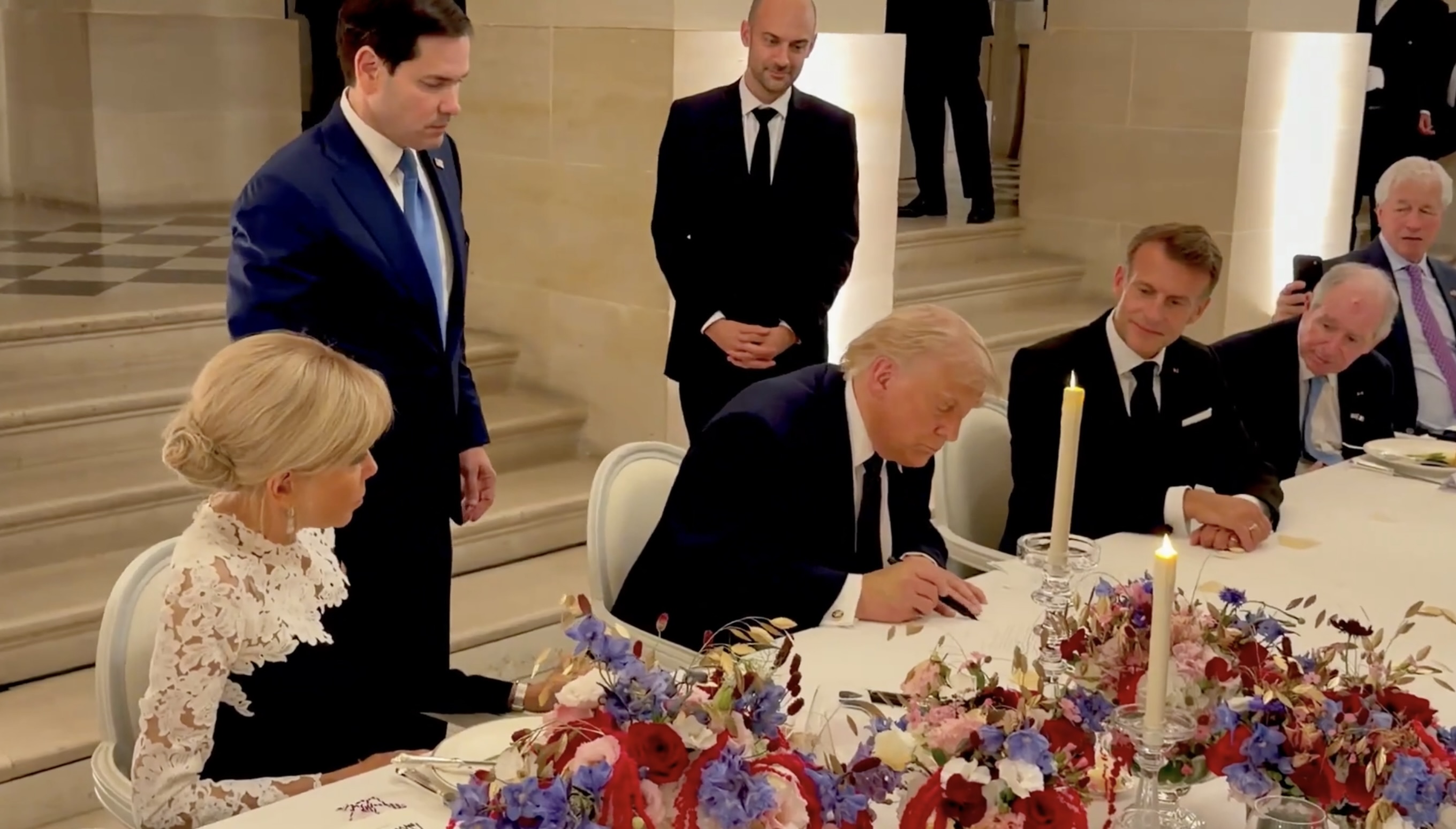
Yesterday, on 18 June 2026, the U.S. President Donald Trump, in a highly unusual move, suddenly took out a document in Versailles and signed it. It became clear that the document he had signed was the well-known 14-point memorandum of understanding concerning Iran. It is not known whether French President Emmanuel Macron, who was seated next to Trump at that moment, had been informed of the process in advance. In any case, however, he could not hide his surprise.
Interestingly, the signing ceremony was originally supposed to take place the following day in Geneva between U.S. Vice President Vance and the Speaker of the Iranian Parliament, Ghalibaf. After Trump unexpectedly signed the document in Versailles, that ceremony was called off.
The signing process on the Iranian side was far less dramatic. President Masoud Pezeshkian signed the document in his office and posted about it on the X platform.
According to the document, combat operations in all directions, including Lebanon, are to be suspended for 60 days; U.S. forces are to be withdrawn from the areas surrounding Iran; Iran’s frozen assets are to be returned; sanctions are to be lifted; the Strait of Hormuz is to be opened by Iran; the United States is to halt its blockade operations; and work is to be carried out on financing a $300 billion package for Iran’s reconstruction. It is also planned that a final agreement, including on the nuclear aspect, will be reached within 60 days.
Leaving aside the protocol-related oddities of the matter, many questions remain regarding the substance of the document.
The main question is whether this document creates any obligation for Israel. The Israeli government stated that the memorandum imposes no responsibility on them, and it demonstrated this in practice as well. Shortly after the signing, Israel carried out strikes against Lebanon. It is true that Vice President Vance criticized Israel. However, experience shows that although the United States sometimes criticizes Israel in public statements, in practice such criticism is not accompanied by real action.
Another question concerns the withdrawal of U.S. troops from the areas surrounding Iran. It is not clear whether this refers to permanent military bases or to additional forces deployed to the region in connection with the war. In any case, it does not seem realistic that the United States would close its military bases in the region.
The next question concerns the $300 billion reconstruction package intended for Iran. It is still unclear whether this package will be financed through loans, direct financial assistance, or other mechanisms.
Reaching a final agreement on this basis could mean an increase in Iran’s regional influence and a significant decline in the role of the United States and Israel in the region. At present, the main question for observers is whether this 60-day preliminary agreement will create the foundation for lasting peace, or whether the parties will simply use it as a temporary pause to prepare for the next stage of military operations. We will probably have a clearer picture after the conclusion of the international football championship being held in the United States.
The Daily Baku editorial team
© 2026 The Daily Baku. All rights reserved.