AIR Center Chairman speaks in Ankara on Azerbaijan's emergence as a middle power
"Azerbaijan's achievements in recent years have elevated the country to the status of a middle power, extending its influence far beyond the borders of the South Caucasus."
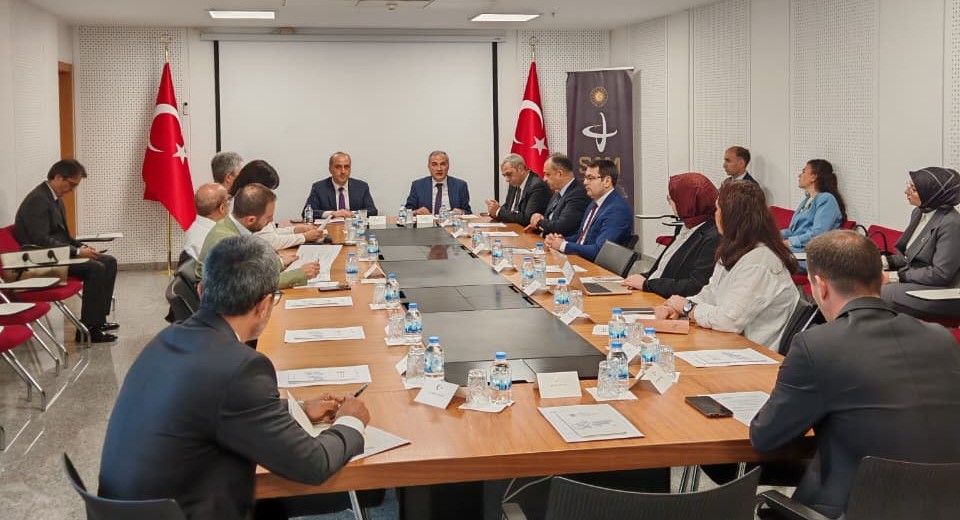
This was stated by Farid Shafiyev, Chairman of the Board of the Center of Analysis of International Relations (AIR Center), during a seminar jointly organized in Ankara by the AIR Center and the Center for Strategic Research of the Ministry of Foreign Affairs of Türkiye.
According to him, Azerbaijan's middle-power status is underpinned by several key factors, including its military and political achievements and the restoration of territorial integrity, its leading role in the regional peace process, the strengthening of regional and international connectivity through strategic transport and energy projects, active multilateral diplomacy and mediation initiatives, as well as hosting major global events such as COP29 and WUF13.
"The Shusha Declaration on Allied Relations, signed between the Republic of Azerbaijan and the Republic of Türkiye in 2021, is of particular strategic importance for our country. The declaration reaffirmed the principles of solidarity and mutual support in bilateral and multilateral formats on issues of national interest, including independence, sovereignty, territorial integrity, and the inviolability of the internationally recognized borders of both states," Shafiyev said.
He noted that Azerbaijan's geostrategic location and regional connectivity potential are becoming increasingly significant on the international stage. Situated at the crossroads of Europe, Central Asia and the Middle East, Azerbaijan has become one of Eurasia's key transit and logistics hubs. In this context, its role in developing the Middle Corridor enables the country to serve as a connecting actor between different geopolitical regions.
According to Shafiyev, in the post-conflict period, the regional connectivity agenda has gained new momentum with the prospect of opening the Zangezur Corridor, an initiative institutionalized under the name TRIPP within the framework of the Washington Declaration. Against the backdrop of disruptions to traditional transport and supply chains caused by the Russia-Ukraine war, as well as growing instability in the Middle East, Azerbaijan's strategic importance as a transit and connectivity hub continues to increase.
He also emphasized that Azerbaijan has advanced its green energy agenda by investing in renewable energy sources, including solar and wind power. Initiatives such as the Black Sea Submarine Cable Project demonstrate the country's ambition to strengthen its position not only as a hydrocarbon exporter but also as an emerging regional hub for green energy and sustainable connectivity.
Shafiyev further noted that Azerbaijan's diplomatic initiatives and mediation efforts reinforce its growing role as a middle power. Among the most notable examples are the country's efforts to provide platforms and communication channels for the establishment of diplomatic contacts between Israel and Türkiye, as well as between Israel and Syria. He added that Azerbaijan has also been actively raising international awareness of pressing global challenges, particularly the devastating humanitarian consequences of landmine contamination.
In conclusion, the AIR Center chairman stated that Azerbaijan is expanding the geographical scope of its foreign policy by further strengthening ties with African and Asian countries, as well as with major global centers of power."Azerbaijan's independent foreign policy contributes not only to regional but also to global peace and security. The country's efforts to ensure stability and sustainable development in the South Caucasus, including its pragmatic and forward-looking approach to peace negotiations with Armenia, reflect Azerbaijan's rational diplomatic course," he concluded.
© 2026 The Daily Baku. All rights reserved.