“Six Months On”: How Chinese Cars Perform in Azerbaijan and Where Real Competition Lies in the Used-Car Market
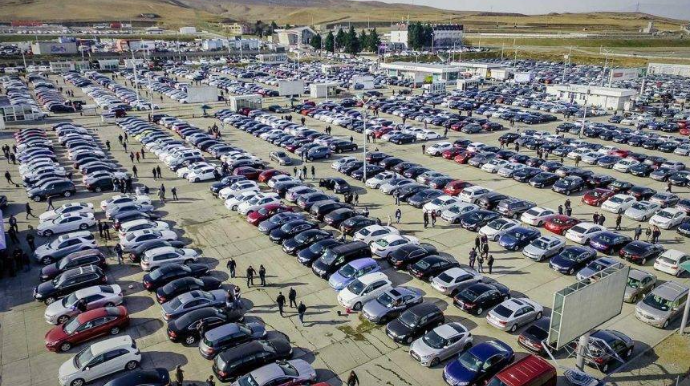
The share of Chinese cars in the Azerbaijani market has long moved beyond being a matter of “trends” and has become a subject of real statistics. In January–September 2025, the number of passenger cars imported from China to Azerbaijan increased from 11,214 to 38,713 units, while China’s share in total imports rose from 18% to 50%.
Some Chinese models have been produced only 6–7 months ago, imported into the country as brand-new vehicles and immediately sold. A 6–7-month period marks the transition from the “first impression” stage to everyday use. It is typically within the 5,000–15,000 km range that issues related to electronics, suspension, interior materials, sound insulation and minor assembly flaws begin to emerge.
In global reliability rankings, the “classical school” still leads. For example, in the J.D. Power 2025 U.S. Vehicle Dependability Study, reliability is measured by PP100 — the number of problems per 100 vehicles — with Lexus ranking first. Although Chinese brands are limited in the U.S. market and therefore not fully represented, the methodology itself sends a clear message: long-term reliability is traditionally associated with established manufacturing discipline and a mature service ecosystem. The same methodology applied in China presents more nuanced results. In the J.D. Power China VDS 2025 report, Chery ranks first among domestic brands with 188 PP100, followed by Hongqi and Geely, and then Changan. These figures do not completely eliminate the stereotype of “low-quality Chinese cars,” but they significantly narrow it, showing measurable quality differences within China itself.
In Europe, reliability faces an even stricter filter. Germany’s TÜV Report 2025 is based on 10.2 million technical inspections conducted between July 2023 and June 2024. The essence of the report is simple: here, brand image does not matter — real inspections do. The general trend highlights higher defect rates in some electric models, while vehicles with well-established mechanical platforms show more stable results. In this context, the rapid launch of multiple models by some Chinese manufacturers makes the “durability test” more challenging: expanding model lines require equally rapid growth in service networks, spare-parts logistics and software updates. For now, production volumes are outpacing these developments, leading some drivers to experience spare-parts issues. In 2025, the share of Chinese brands in the UK market grew from 4.9% to 9.7%, reaching around 196,000 vehicles; BYD sold 51,000 units, while Chery sold 54,000. While this growth strengthens the argument that consumers are willing to buy, questions about residual value and long-term reliability remain open.
In the used-car market, trust is the key factor: when the market lacks confidence in a brand, prices fall faster; when trust exists, depreciation is more gradual. For some Chinese brands, the main risk lies in the instability of residual values, whereas Japanese and certain Korean brands benefit from long-established reputations and more predictable pricing.
For Azerbaijani drivers, the most commonly reported issues during the 6–7-month real-world test of Chinese cars fall into three areas: short-term system freezes, minor suspension and road-adaptation issues, and service-related matters such as spare-parts waiting times, software updates and language support. Many Chinese manufacturers attempt to mitigate these risks by offering extended warranties, which in Azerbaijan creates the perception that warranty coverage reduces potential costs if problems arise. Chinese cars have largely moved beyond the image of a “low-quality alternative,” yet they have not fully reached the stage of being considered a “stable used-car choice.” China’s share in Azerbaijan’s imports reaching 50% suggests that throughout 2026 the market itself will determine which brands become reliable options and which may face uncertainty once warranties expire.
In Azerbaijan, the used-car market traditionally revolves around a single question: “Will I be able to sell this car tomorrow?” Early observations indicate that while Chinese brands are attractive for first-time buyers, they still face trust issues at the resale stage. In Baku’s car markets and online platforms, Chinese-made vehicles from the 2024–2025 model years are already being offered at prices 15–25% below their original value after just 6–8 months. By comparison, Japanese Toyota Corolla or Korean Hyundai Elantra models typically lose only 8–12% over the same period.
The most noticeable depreciation is seen in mid-size SUVs heavily loaded with electronics. Large screens, touch controls and digital dashboards appear advantageous at purchase, but for used-car buyers they represent potential risk. In Azerbaijani conditions, mechanical simplicity remains highly valued.
In the long term, the key question remains unchanged: will Chinese manufacturers focus solely on increasing sales volumes, or will they take steps to stabilize the used-car market as well? If spare-parts availability improves, service networks deepen and models undergo longer-term usage tests, today’s 15–25% depreciation could significantly decrease over a 3–5 year horizon.
The Daily Baku Editorial Team
© 2026 The Daily Baku. All rights reserved.